


In a nutshell
Government bond yields have risen sharply. The yield on the ten-year US Treasury note has exceeded 5% for the first time since 2007, while the German Bund has surpassed 3.5%. This global trend has been observed since late June, with a generalized increase across the entire bond yield curve.
Three factors explain this dynamic:
Escalating geopolitical tensions and rising energy prices. Tensions in the Middle East are keeping energy prices at high levels. Brent crude exceeded $109 per barrel on Monday. Also of concern: European natural gas has soared by 100% since late June, reaching its highest levels in three years, amidst low reserves ahead of winter. This energy surge is forcing investors to revise their inflation trajectories upward, mechanically fueling pressure on bond yields.
A more pronounced monetary tightening than expected. Market expectations regarding monetary policy have shifted in the face of economic resilience and inflation dynamics. Investors anticipate that the European Central Bank will implement three additional rate hikes beyond the one in September, whereas in June the market only anticipated one rate hike in September. In the United States, the scenario is similar: the market is now betting on three to four additional hikes. The speech by Fed Governor Kevin Warsh at Jackson Hole in August reinforced this conviction, highlighting the remarkable resilience of the US economy, the persistence of inflation, and the scale of investment. The latest inflation figures reinforce this scenario.
Rising risk premiums. Investors are now demanding higher compensation to position themselves in long-term debt, particularly in the 30-year segment. Three factors explain this increased vigilance:
- High debt levels in major economies.
- The massive growth in sovereign debt issuance in Japan, the UK, the US, and Germany, as well as AI financing needs, are intensifying competition for available savings.
- The more uncertain geopolitical environment is multiplying supply shocks, reducing investors' propensity to commit long-term.
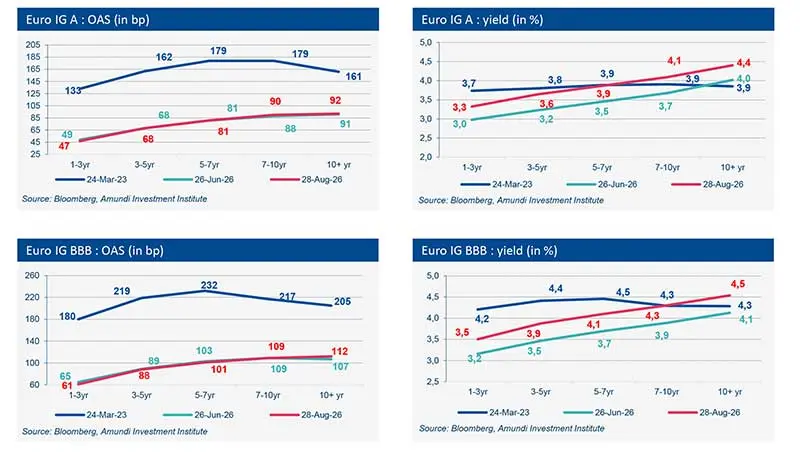
Impact on credit markets: paradoxically, credit markets are showing relative resilience. Nevertheless, credit spreads have widened in recent days particularly among the most indebted issuers, signaling cautiousness among investors. Corporate fundamentals remain solid, and this asset class is benefiting from the deployment of investors seeking to reduce their duration exposure while preserving yield.
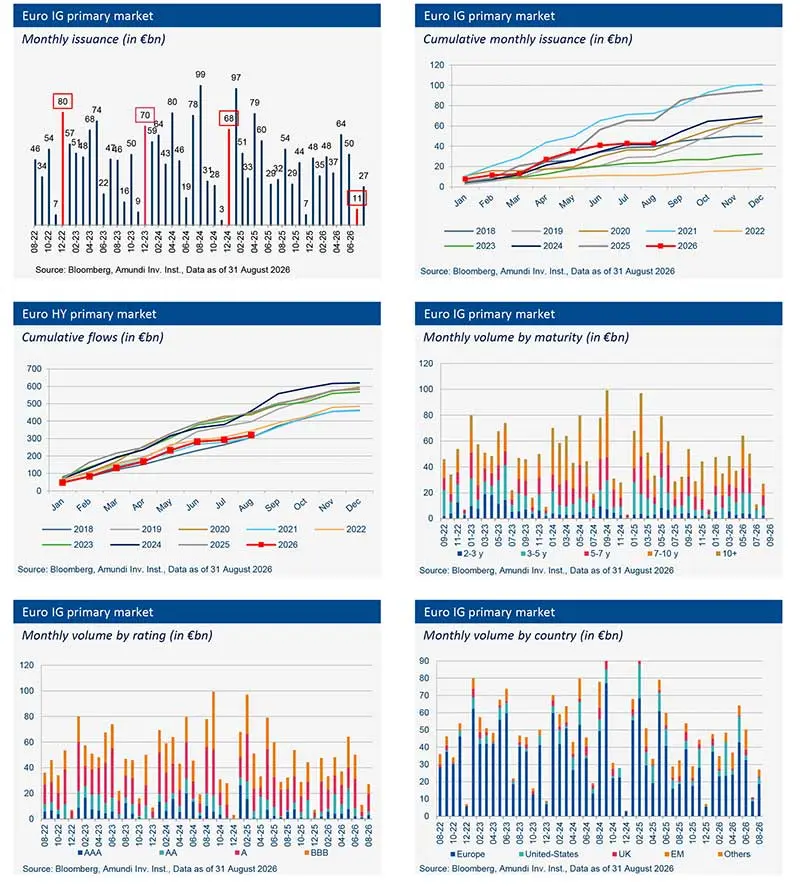
Primary market Investment Grade
Market data
Get to know our treasury offering